












Does Your Oven’s Fuse Keep Blowing?

Does Your Oven’s Fuse Keep Blowing? Do You Know When to DIY and When to Call an Engineer?
A fuse that blows once could be a one-off. When an oven fuse keeps blowing, its telling you something is wrong and will keep being wrong until someone deals with it. The question most people get to eventually is whether this is something they can sort themselves or whether it needs a professional.
Honest answer: it depends on the cause. Some of these faults are straightforward. Others are genuinely dangerous to approach without the right equipment. Here’s how to work out which you’re dealing with.
What’s Actually Blowing?
Worth being clear on what type of fuse you’re dealing with.
If it’s the consumer unit tripping, it’s almost certainly an MCB (miniature circuit breaker) that resets by flipping a switch rather than a fuse that physically blows. Older properties with traditional fuseboards may have rewirable or cartridge fuses that actually need replacing each time. There’s also a fuse inside the oven plug, or in the connection unit on hardwired ovens, which is a smaller cartridge fuse rated for the appliance specifically.
Knowing which one is failing changes the diagnostic process. Our complete guide to oven tripping electrics goes through all the causes in detail, but the short version: a fuse in the plug blowing repeatedly usually means the oven is drawing more current than it should. An MCB tripping repeatedly at the consumer unit usually means fault current is going somewhere it shouldn’t.
The Common Causes of Oven Fuse Keeps Blowing
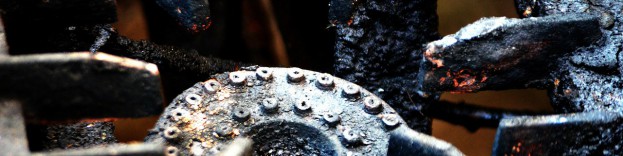
Failed heating element. The most frequent cause. An element that’s shorted internally creates a direct fault to earth. Every time power is applied, the fault current exceeds what the fuse or breaker is rated to pass and it blows or trips. An element failure that causes immediate blowing on switch-on is almost certainly a short rather than a clean break. Visible damage helps confirm it: burn marks, holes, or cracks on the element surface. No visible damage doesn’t rule it out, as the break can be internal.
Wiring fault. If the element tests fine, degraded wiring inside the oven is the next possibility. Years of heat cycles harden and crack insulation, and eventually bare wire contacting the casing creates the same earth fault as a shorted element. This is the cause that most warrants getting a professional involved, because finding it requires the oven to be partly disassembled and tested properly. More on this in the oven tripping electrics guide.
Wrong fuse rating. If someone has replaced the fuse with one of the wrong ratings, it may be blowing because it’s rated too low for the oven’s normal operating current. Check the oven’s rating plate (usually on the door frame or back panel) and confirm the fuse rating matches. A cooker tripping electrics repeatedly because of a mismatched fuse is an easy fix, though it does raise the question of why the original fuse was replaced in the first place.
Thermostat or control board fault. Less common, but a faulty thermostat or control component can cause abnormal current draw that blows fuses without a clear short circuit being present. These are harder to diagnose without test equipment.
When You Can Probably Handle It Yourself
Visibly damaged element. This is the one you can probably sort yourself. The element unbolts or unclips, the connections are simple, and parts for most brands are easy to find and not expensive. If you’re happy taking the back of an oven off, this is well within reach.
Wrong fuse rating. Check the rating plate on the door frame or back panel and make sure whoever replaced the fuse last time put the right one in. If the new correct-rated fuse holds, that was the issue. If it blows again straight away, the fuse was never the root cause.
Recently cleaned and then started blowing. Moisture inside the cavity from cleaning can create temporary fault paths, especially if the oven was used again quickly after. Leave it off and open for a few hours, then try again. Holds fine: moisture was the culprit. Blows again: something else is going on underneath.
When to Call an Engineer
If replacing the element doesn’t fix it. A cooker tripping electrics after a new element has been fitted means the fault is elsewhere. Wiring, thermostat, or control components need proper diagnosis.
If the element looks undamaged but the oven fuse keeps blowing. No visible cause means the fault is likely internal. Either within the element itself or in the wiring. Both need test equipment to confirm.
If the breaker trips immediately every time. Don’t keep resetting. A persistent earth fault that trips immediately on every attempt needs someone with an insulation resistance tester, not someone with a finger on the reset switch.
If you’re not sure. That’s reason enough. An oven fuse keeps blowing, a problem that gets worse because someone tried various fixes without identifying the root cause costs more to repair than one that gets looked at properly the first time.
For a full breakdown of every cause and what each means for repair, the oven tripping electrics guide is worth reading before doing anything else.
Getting It Looked At
Cooker Solutions Ltd covers South London and Surrey, seven days a week from 9am to 9pm, no call-out charge. We carry elements for most major makes and can usually complete a repair in a single visit when a part is needed.
Replaced the element and it is still blowing? Not sure where to start? Call us on 0750 822 9049 or get in touch here and we’ll come out and find it.
We cover Clapham, Brixton and Wandsworth, Battersea and Wimbledon, Croydon, Bromley, Dulwich, and surrounding areas.
0750 822 9049 / cookersolutions@mail.com / contact us here